
INTRO
You do not have an email problem.
You have a relevance problem.
Most B2B founders blame the subject line, the CTA, or the offer when their list stops converting. So they tweak the copy. Then they tweak it again.
Nothing changes because the real leak is upstream. They are sending the same message to buyers with different problems, different urgency, and different reasons to care.
That is not a copywriting problem.
That is a revenue architecture problem.
The offer can stay the same. The reason they care cannot.
Your List Is Not One Audience
When your list is small, the buyer still feels personal. You have had the calls. You know their situations. You can write an email that sounds like it was written for one person because it basically was.
As the list grows, that clarity disappears. You end up with a mix of people at different revenue stages, different business models, different pain levels, and different readiness to buy. You send them all the same message on the same day because that is what the content calendar says.
That is where the leak starts.
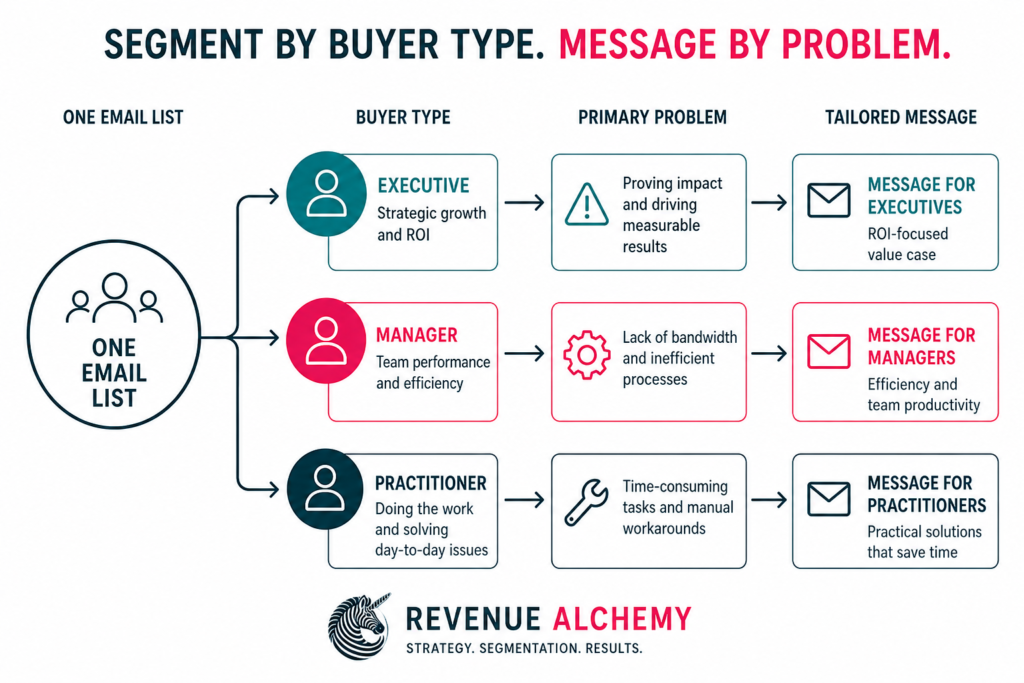
A $1.5M manufacturing company president who is frustrated that his sales team is inconsistent does not need the same email as a female founder at $800K who is operationally sharp but has no repeatable outbound system. They have different problems, different motivations, and different objections.
When you send them the same email, neither of them feels like you are talking to them. And buyers who do not feel seen do not buy.
The Tool Is Not the Decision
Most people hear “email segmentation” and immediately think about tags, automations, and which platform supports dynamic content blocks.
That is the wrong starting point.
Segmentation is a revenue strategy problem before it is a technology problem. The question is not which tool can do it. The question is: what do you actually need to know about a buyer to send them the right message?
Here is the buyer intelligence that matters:
- Who they are: business type, revenue stage, role
- What they have already tried: so you do not pitch them something they dismissed two years ago
- What is stopping them: the real objection, not the polite one
- What motivates them: two people can want the same outcome for completely different reasons
- What success looks like for them: their words, not yours
- Where they are in the buying decision: curious, evaluating, or ready now
When you have that data, you do not need to write a different email for every segment. You need to change the doorway.
What Generic Messaging Actually Costs You
You promote by calendar instead of by relevance. This week you send everyone the same campaign because it is Q2 and that is what the plan says. But a third of your list already bought something similar. Another third is not ready. The remaining third might be a fit but your message is too broad to reach them.
You get soft yeses that disappear later. The email created interest but not enough conviction. They clicked because the pain was real. They ghosted because the message did not connect that pain to the right next step for their business. That is not a nurture problem. That is a relevance gap.
You create what looks like a deliverability problem but is actually a relevance problem. Low engagement tanks your sender reputation over time. The root cause is not technical. People stopped opening because the emails stopped being relevant.
More leads will not fix this. More content will not fix this.
Build the Intelligence Layer First
You need enough buyer intelligence to make the next message relevant. You do not need to know everything about everyone. You need to know enough about the right people.
The best time to collect this data is when someone is most engaged: right after they opt in, during a diagnostic conversation, or after they take a meaningful action like booking a call or clicking a specific topic repeatedly.
A simple post-opt-in question works. Something like: tell me a little about your business so I can send you what actually applies to you. People will answer because they do not want generic emails either.
For established B2B companies, the most effective version of this is a revenue diagnostic. Not a quiz with a personality result at the end. An actual diagnostic that captures real buyer intelligence, identifies where the revenue leak is, and routes the person to the next right step.
This is the first entry point into a Conversion Crucible: a revenue operating system built around who your buyers actually are and what they actually need. Before you build the sales system, you have to know who you are building it for. The diagnostic is not intake. It is the first sales conversation.
Automation comes later. Relevance comes first.
What This Looks Like in Practice
A founder came to us with a list of over 10,000 contacts and open rates most marketers would envy. The emails were beautifully designed. People opened them consistently.
Zero conversions. Zero replies. Not one sales conversation.
When we dug in, we found two problems. The content was attracting the wrong audience entirely. And the offer she was promoting was not actually the offer she wanted to build. She had been selling something familiar because it felt safe, while the real offer, the one she had been thinking about for years, was still sitting in a document somewhere.
We stopped the broadcasts. Built the real offer first. Then used a diagnostic to identify which people on that list, if any, were actually the right fit for it.
The list shrank. The conversations started.
That is not a list problem. That is a revenue architecture problem.
Find the Leak Before You Send Another Campaign
If your list has stopped converting, do not start by rewriting the email.
Start by finding the leak.
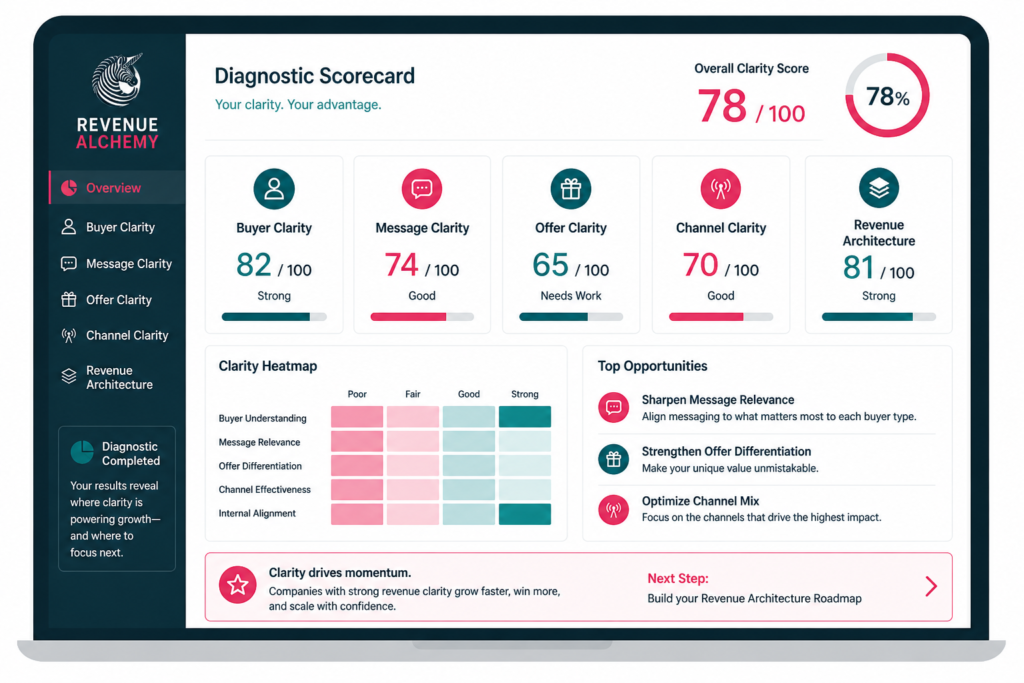
The Revenue Alchemy Diagnostic identifies where your revenue architecture is breaking down, which buyer segment needs attention first, and what to fix before you add more content, automation, or outreach.
No generic report. No one-size-fits-all recommendation. Just a clear read on what is leaking and the
next move to make.