
Omnichannel B2B Outreach in 2026: What Actually Works (And Why Volume Isn’t the Answer)
Omnichannel B2B outreach is a coordinated, multi-channel sales motion that routes prospects into the right sequence at the right time, using buying signals to determine when and where to make contact. It integrates email, LinkedIn, phone, and video into a single, connected buyer experience instead of treating each channel as a separate activity.
If you’re still measuring your outreach program by emails sent per week, you’re optimizing the wrong thing.
The B2B outreach model that worked five years ago has broken. Not slowed down. Broken. Volume-heavy, single-channel blasts aren’t getting replies. They’re getting filtered, flagged, and ignored at scale.
But that doesn’t mean outbound is dead. It means the execution model has to change.
This post breaks down what an effective omnichannel B2B outreach system actually looks like in 2026, where most founders are getting it wrong, and what needs to shift before adding more leads or more activity makes any sense.
Why Your Current Outreach Isn’t Working
Most founders I talk to are running outreach on top of a broken foundation. They’ve tried cold email. They’ve tried LinkedIn connection requests. Some have tried video. Nothing sticks.
The default diagnosis is that the channel isn’t working or that the copy needs improvement. So they test new subject lines, try a different sequence tool, or hand it off to someone to send more messages.
That’s not a solution. That’s adding volume to a problem you haven’t diagnosed yet.
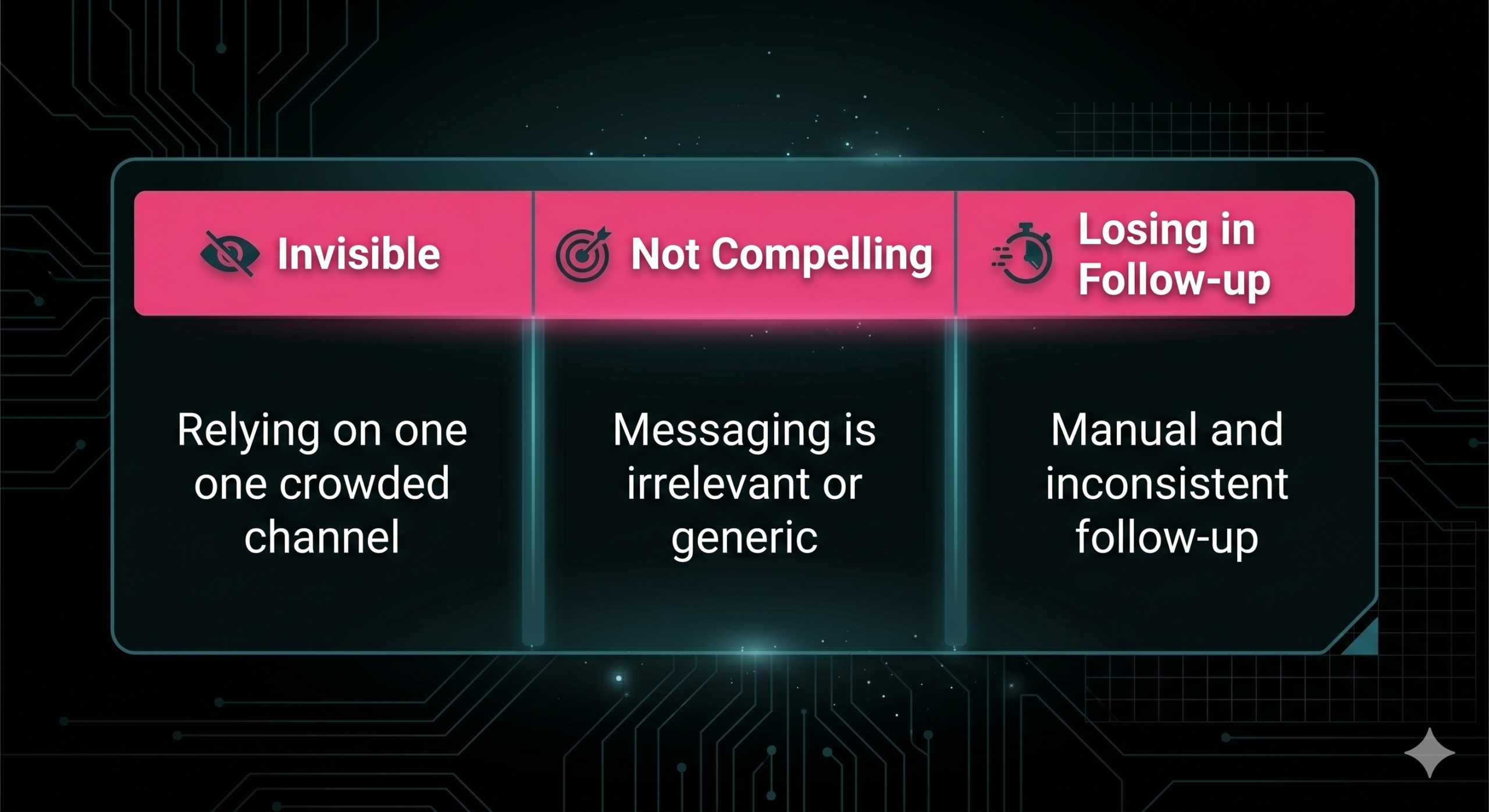
Before you scale any outreach motion, you need to know which of these is actually true for your business.
You’re invisible to the right buyers. They don’t know you exist or don’t see you as relevant to their specific problem. This is an ICP and positioning issue, not an outreach volume issue.
You’re visible but not compelling. You’re showing up but the message isn’t landing. Buyers read your email, look at your LinkedIn, and move on. This is a messaging problem.
You’re getting interest but losing it in the follow-up. Prospects reply, agree to a call, then ghost. The outreach is working. The pipeline stage behind it isn’t.
Running more outreach before you’ve diagnosed which problem you have is how you burn a list and damage your domain reputation at the same time.
What Omnichannel B2B Outreach Actually Means
A coordinated sequence means that your LinkedIn connection request, your cold email, and your follow-up message all reference the same context. The same trigger. The same business reality you’ve observed about that prospect. Each touchpoint builds on the previous one, rather than treating the buyer like a stranger again.
Coordinated sequences integrating email, LinkedIn, phone, and video generate roughly 40% higher engagement than single-channel programs. That’s not because more channels mean more noise. It’s because consistent presence across channels creates familiarity, and familiarity reduces the perceived risk of responding.
The Shift From Volume to Signal
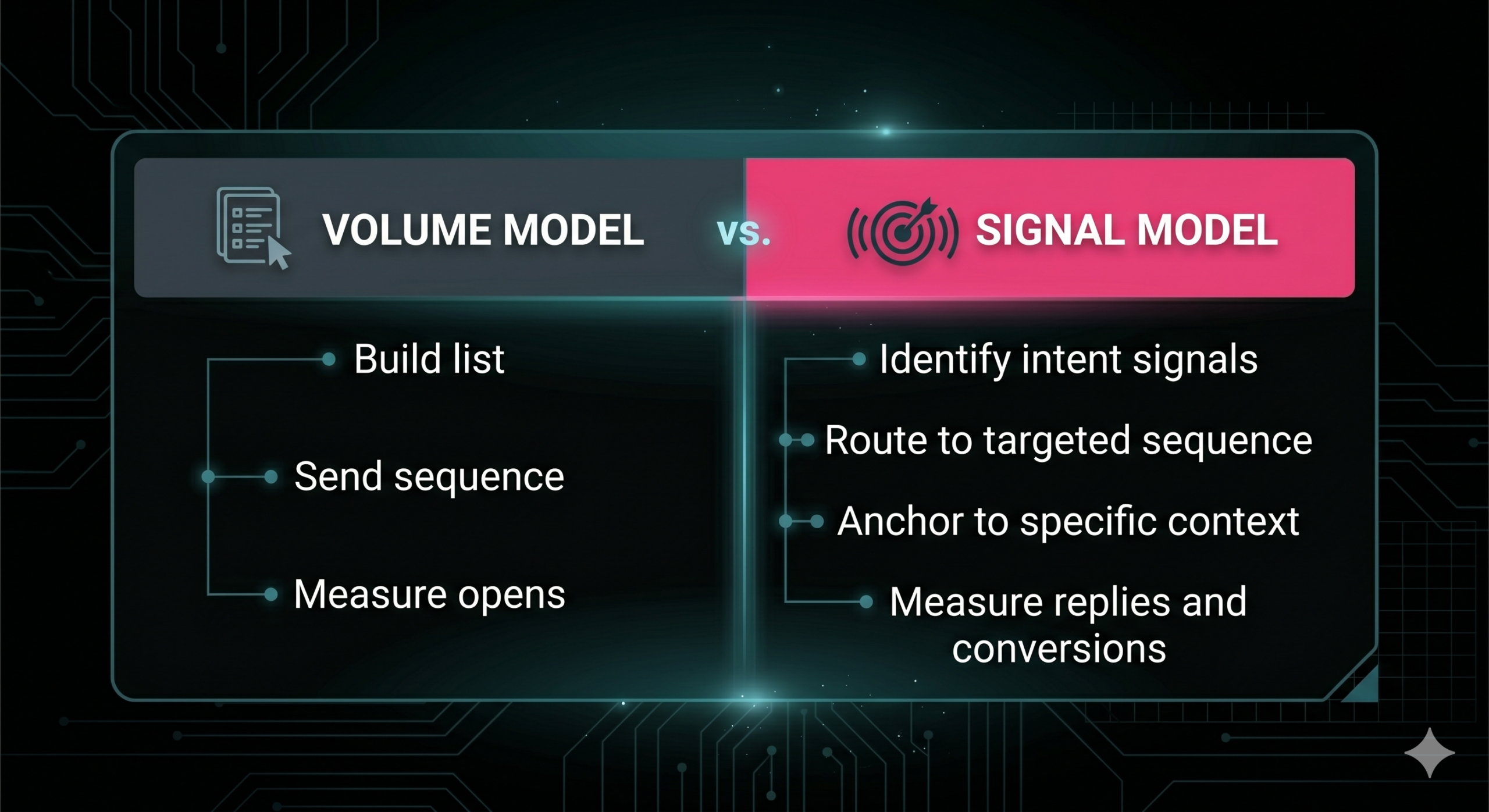
Here’s the model most founders are running:
Build a list. Send a sequence. Hope for replies. Measure open rates.
Here’s what works:
Identify buyers already showing buying signals. Route them into a targeted sequence. Anchor every message to a specific, verifiable context. Measure reply rate and conversion to qualified conversation.
Buying signals worth tracking:
A prospect visiting your high-intent pages, such as pricing or case studies. Engagement with your content on LinkedIn. Trigger events such as a leadership change, a funding round, or a tech stack shift. Role changes that create a new problem the buyer needs to solve.
When your outreach is anchored to an actual signal, you’re not interrupting. You’re responding. Intent-led outreach consistently produces reply rates two to three times higher than cold, untargeted outbound.
This is why most B2B outreach fails at the message level even when the targeting is decent. Generic copy applied to a list of relevant buyers doesn’t perform. Signal-anchored copy applied to a prioritized list does.
What Signal-Anchored Personalization Actually Looks Like
There’s a version of personalization that looks like this:
“Hi [First Name], I saw your post on LinkedIn and wanted to reach out.”
That’s not personalization. That’s a mail merge with extra steps.
Real personalization means referencing something undeniable and specific. Their actual business context. A recent shift in their role, their industry, or their company structure that creates a problem you know how to solve.
When a buyer reads your message and thinks “this person actually did the homework,” your response rate goes up. When they read it and think “this is a template with my name swapped in,” they delete it without replying.
The bar for what qualifies as specific context has risen. Buyers have been on the receiving end of enough “personalized” outreach that they pattern-match it immediately. If your research doesn’t go past what’s in their LinkedIn headline, it shows.
The Infrastructure Problem Nobody Talks About Enough
You can have the right list, the right message, and the right sequence and still fail if your technical infrastructure is broken.
Deliverability is a strategic issue, not an IT checklist item.
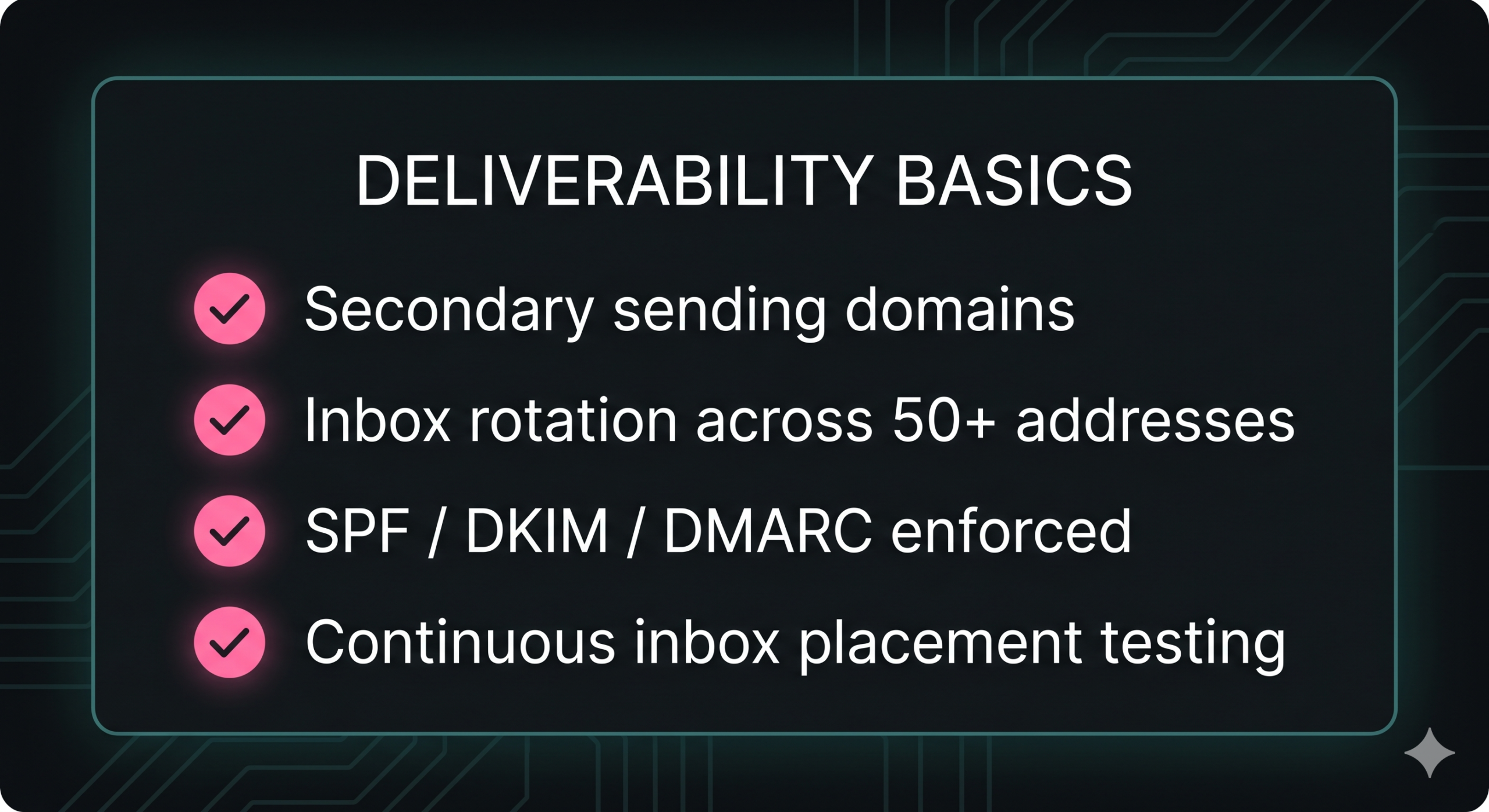
High-performing outbound programs protect primary domains by routing outreach through secondary sending domains. They distribute volume across multiple inboxes so that no single address appears to be a mass sender. They enforce SPF, DKIM, and DMARC protocols. And they test inbox placement continuously, not just when a campaign underperforms.
If your emails are landing in spam, it doesn’t matter how good the copy is. The reader never sees it.
Most founders discover the deliverability problem six months into a campaign when reply rates have collapsed, and domain reputation has been damaged. That’s a much harder problem to fix than it is to prevent.
The Revenue Architecture View of Outreach
Here’s where most outreach advice stops short.
It treats outreach as a standalone activity. Write good emails. Use multiple channels. Personalize more. Measure reply rate.
What it misses is that outreach doesn’t operate in isolation. It’s one module in a revenue system. And if the modules around it aren’t built, more outreach just creates more chaos.
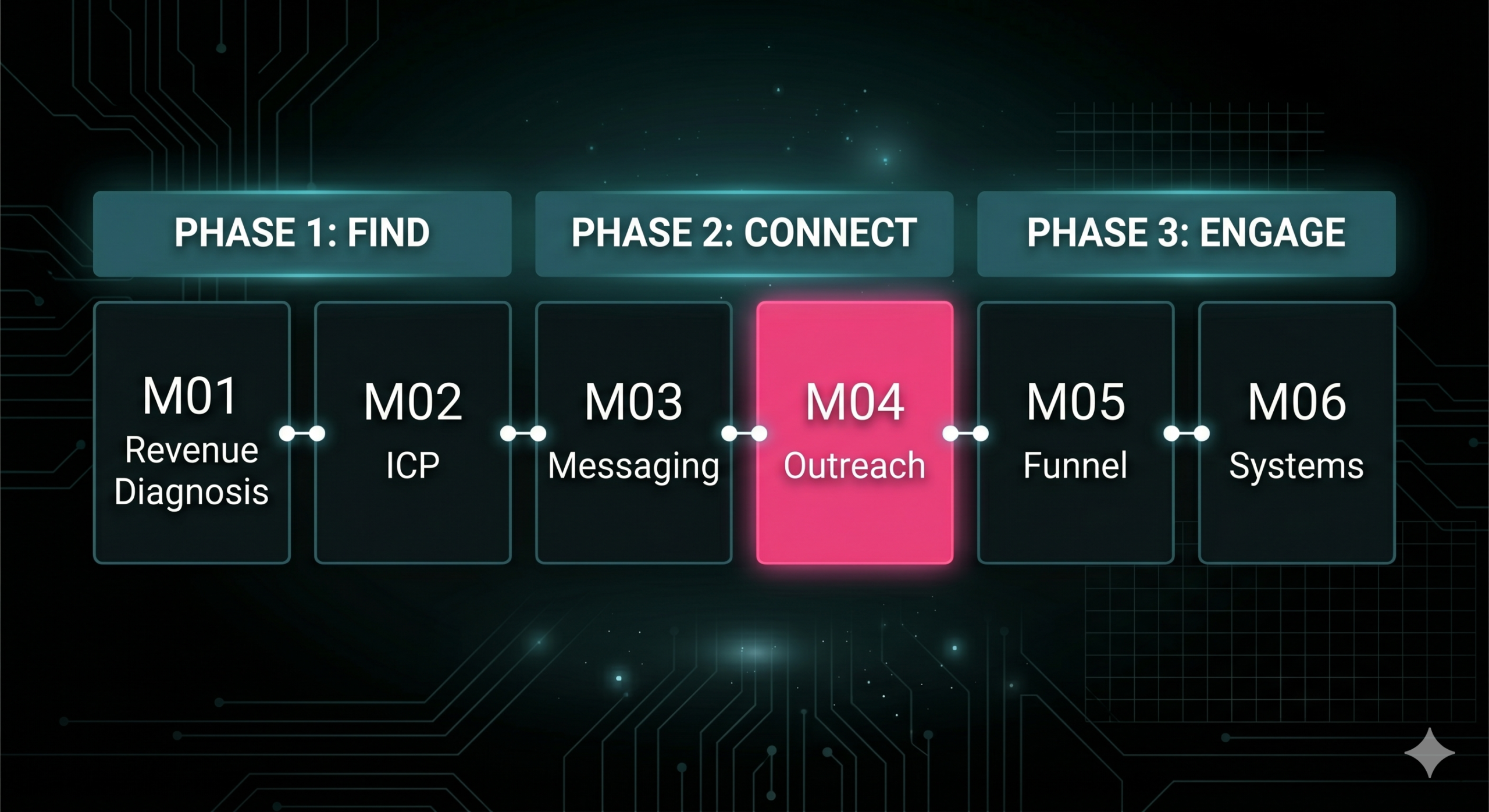
In the Conversion Crucible, outreach lives in Module 04. It runs after you’ve completed Module 01 (Revenue Diagnosis), Module 02 (ICP and Market Intelligence), and Module 03 (Messaging and Positioning).
That sequencing isn’t arbitrary. You can’t write a signal-anchored message if you haven’t diagnosed what problem you actually solve for which specific buyer. You can’t build a multi-channel sequence if your core message isn’t clear. You can’t route prospects to the right pipeline stage if you haven’t defined those stages.
This is the architectural problem that causes most outreach to underperform. Founders bolt on tactics before the underlying system is built.
One of our past clients had a full LinkedIn inbox of warm leads sitting unconverted when we started working together. Her outreach wasn’t the problem. Her ICP wasn’t tight enough, her qualification logic didn’t exist, and there was no system behind the initial conversation. The work wasn’t more outreach. It was building the architecture that makes outreach actually work. The result was a booked calendar, a drastic reduction in workload, and a shift from 1:1 meetings to group-based leverage.
More outreach would not have fixed that. Architecture did.
The Role of Personal Brand in Cold Outreach
One of the most underused levers in B2B outreach is the founder’s consistent content publication.
When a prospect receives your email or LinkedIn message after already seeing your content in their feed, you’re not a cold contact. You’re a familiar name with established credibility. That’s a fundamentally different conversation.
Roughly 89% of B2B marketers use LinkedIn for lead generation. The founders who get the best response rates from outreach are usually the ones who have already built passive familiarity through content before the direct message ever arrives.
This doesn’t require a content machine or a posting schedule you’ll abandon in six weeks. It requires publishing on a topic you actually know deeply, consistently enough that your name becomes associated with that problem space.
When the cold email arrives, it feels like a logical next step in an ongoing conversation rather than an unsolicited interruption.
What Needs to Change Before You Scale Outreach
Before adding volume, tools, or channels, run a quick diagnostic on your current outreach system.
Ask yourself:
Is your ICP specific enough to write a message that references a real problem a real person is experiencing right now?
Is your core message clear enough that a prospect who doesn’t know you can understand what you do and who it’s for in under 30 seconds?
Do you have a defined pipeline stage behind the first reply that moves the conversation forward?
Is your sending infrastructure set up to protect deliverability?
If any of these answers is no, adding outreach volume will produce worse results, not better ones. A broken system scaled is just a bigger broken system.
Frequently Asked Questions About Omnichannel B2B Outreach
Is outbound still an effective strategy in 2026?
Yes. Roughly 78-82% of B2B leaders describe outbound as essential to growth. The execution model has changed. The channel hasn’t died. Volume-heavy, untargeted blasts don’t work. Coordinated, signal-led sequences do.
Can a small team run an omnichannel outreach system?
Yes, but the system has to be built before it’s scaled. A small team with a clear ICP definition, a clean message, and a two- to three-channel sequence will outperform a larger team running high-volume activity without the underlying architecture. Start with the constraint, not the headcount.
How often should I be reaching out to a prospect?
Enough to stay visible without becoming noise. A well-built sequence typically runs four to six touchpoints over two to three weeks across two to three channels. The cadence should slow or stop based on engagement signals, not just time elapsed.
What’s the difference between personalization that works and personalization that doesn’t?
Personalization that works is anchored to something undeniable and specific to that buyer: a trigger event, a role change, a business condition they’re navigating right now. Personalization that doesn’t work is a mail merge with their first name and a vague reference to their LinkedIn profile. Buyers pattern-match it immediately.
How do I know if my outreach problem is actually a messaging problem?
If you’re getting opens but no replies, it’s likely a messaging problem. If you’re getting replies but no booked calls, it’s a pipeline stage problem. If you’re getting no opens, it’s a deliverability or targeting problem. Each has a different fix. Treating them as the same problem is how founders spend quarters on the wrong solution.
What’s the first thing to fix if my outreach isn’t working?
Run a diagnosis before you change anything. The most common mistake is assuming the channel or the copy is the problem when the real issue is ICP clarity or a missing qualification step behind the first reply. Fix the architecture. Then adjust the message.
Ready to find out where your outreach is actually leaking?
Start with the free 10-Point Revenue Leak Checklist. It maps the gaps in your current revenue system across visibility, messaging, follow-up, pipeline, and capacity so you know exactly where to focus first.